

Cart
0
Meta Title: Therapy Dog vs Service Dog: Training, Access, and Rules
Meta Description: What's the difference between a therapy dog and a service dog? Compare training, public access and daily rules, with stories from my time volunteering with guide dogs in training.

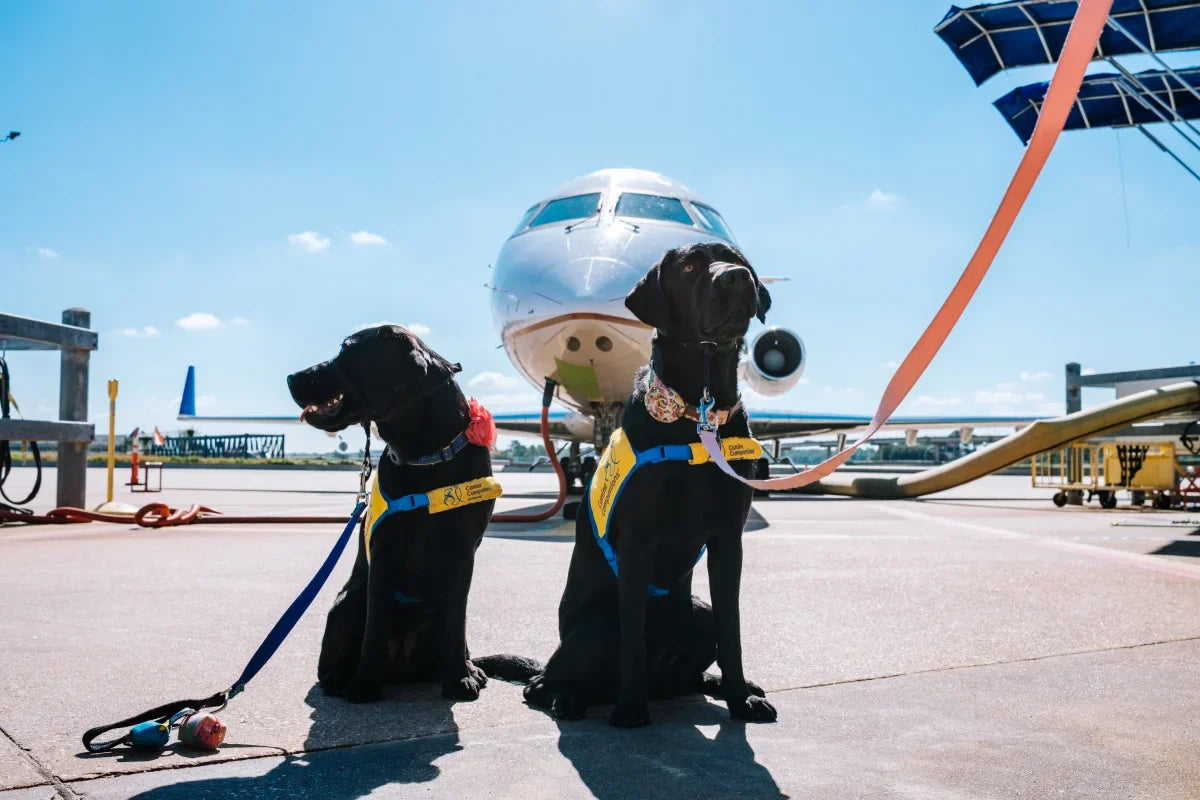
Caption: Two Canine Companions dogs sitting in front of an airplane
Therapy Dog vs Service Dog: Training, Access, and Rules
A service dog is trained to do specific tasks for one person with a disability, and they can go almost anywhere that person goes. A therapy dog comforts lots of people in places like hospitals, schools and care homes, and they only visit where they're invited. An emotional support dog comforts their owner just by being there, without any task training.
I'm Gina, the founder here, and I've had dogs since I was five years old. I've been lucky enough to see both sides of this. I showed one of my dogs in obedience until he became a certified therapy dog, and I volunteered with OccuPaws, an organization that trains and raises service dogs for people who are visually impaired. Those sweet dogs taught me so much about where each kind of dog can go, what people can ask you and what a working day looks like.
What this article covers
What Each Dog Is Trained to Do and Whom It Works For
The easiest way to compare a therapy dog vs service dog is to ask who the dog is working for. A service dog works for their handler. A therapy dog works with their handler to comfort other people.
|
Type of Dog |
Trained To |
Works For |
|---|---|---|
|
Service dog |
Do specific tasks tied to a disability, like guiding a person with a visual impairment |
One handler with a disability |
|
Therapy dog |
Stay calm, gentle and friendly with strangers in busy settings |
The people they visit, alongside their handler |
|
Emotional support dog |
No specific task training required |
Their owner |
I worked with three OccuPaws dogs, two Labs and a golden retriever, and I got to take my service dog in training everywhere I went. Those sweet pups weren't learning to be well-behaved pets. They were learning how to keep someone safe.

Caption: Dog wearing a harness and leash beside a person
Where Each Type of Dog Is Allowed to Go
Under the Americans with Disabilities Act (ADA), service dogs in the US can go with their handlers into most public places, including shops, restaurants and public transport. A business can only ask a handler to take their service dog out for one of two reasons:
-
The dog is out of control, like lunging, growling, jumping on people or barking over and over in a quiet place, and their handler doesn't take effective action to settle them. A single bark, a bark when someone provokes them or a bark that's a medical alert doesn't count.
-
The dog isn't house-trained.
Even then, the business still has to serve the handler without their dog there. A handler who's asked to step out with their pup hasn't lost their right to shop, eat or get help.
Some areas inside a public building can stay off limits too, where a dog would compromise strict health and safety standards or change the nature of the service. The US Department of Justice gives a few examples:
-
Hospital operating rooms and burn units, where a dog could compromise a sterile environment. Service dogs can still go into patient rooms, clinics, exam rooms and the cafeteria.
-
Swimming pools, where a service dog can stay on the pool deck but not go in the water.
-
Amusement park rides where the safety restraints can't hold a dog safely.
-
Zoo exhibits with animals that are natural prey or natural predators of dogs, where a dog would upset the animals on display.
Therapy dogs don't have those public access rights. They go where a facility welcomes them, usually for an organized visit, and the rest of the time, they follow the same rules as any other pet. Emotional support dogs don't have public access under the ADA either, though housing rules can treat them differently, so check with your landlord or local housing authority first.

Caption: Woman sitting beside a brown dog in a turquoise harness
What a Handler Can Legally Be Asked
When it isn't obvious what a service dog does, staff at a business can ask only two questions under the ADA:
-
Is the dog a service animal required because of a disability?
-
What work or task has the dog been trained to do?
Staff can't ask about the person's disability, ask for medical records or proof of training, or ask the dog to show their task. No vest, ID card or online certificate makes a dog a service dog, and the law doesn't require any of them. A business can't charge a pet fee or deposit for a service dog either, even at a hotel, though a handler can be charged for damage their dog causes if other guests would be too. If you're a handler, it's good to know these rules by heart, so you can stand your ground kindly when someone gets them wrong.
Therapy dog handlers, on the other hand, should expect facilities to ask about registration, health records and training before a visit.
Life in the Vest at OccuPaws
Training a service dog comes with a lot of rules, and at first, it felt like there were so many of them. Once the vest went on, my OccuPaws pups were working, so they weren't allowed to potty in their vest or on a walk. Before heading out, I'd take their vest off, plant my feet and stand still like a tree while they did their business. Labs love to wander and sniff while they go, but a person who can't see can't follow their dog around the yard. Other service dog programs might set their own routines, but once I thought about it from the handler's side, every rule made sense.
Stairs had their own rule. I trained the dogs to take one step, wait for me, then take the next, so their person could keep up safely. Play had limits too. My OccuPaws pups weren't allowed to swim or play fetch, because a guide dog can't be the kind of doggo who bolts after a ball. It's a little sad that they can't always just be dogs, and I wish I could have done it for longer.
So if you see a dog in a vest, please admire them from a distance, however cute they are. Petting or calling to a working dog can pull their attention away from the person relying on them.
Everyday Gear for a Dog Who Isn't Working
Off duty, a therapy dog or family pupper needs comfy gear that makes daily walks easy for both of you. A well-fitted harness spreads pressure across your dog's chest, a soft collar holds their ID tags, and with a sturdy leash in your hand, you stay in control without any strain. Our friends at Pink Papyrus make the prettiest everyday walking gear, from harnesses and collars to hands-free leashes and walk sets. A hands-free leash is a lifesaver when you're juggling treats, poop bags and your phone, and they also make sweet little treat pouches and waste bag holders to keep everything handy.

Caption: Woman holding colorful leashes attached to a Siberian husky
How to Start on the Therapy Dog Route
If your furbaby loves people and stays relaxed around noise, therapy work could be a lovely fit. My own therapy dog journey started in the obedience ring. I showed one of my dogs in obedience, and he earned his Canine Good Citizen badge and his Companion Dog title before becoming a certified therapy dog.
That was the path that suited my dog, but it isn't a checklist for yours. Every therapy dog organization sets their own requirements, so here's a sensible order to follow:
-
Start with solid basic manners, like walking politely on a leash, sitting and staying, and greeting strangers calmly.
-
Work toward the Canine Good Citizen test, which lots of owners use as a benchmark for everyday good behavior.
-
Try obedience classes or titles, like the Companion Dog title my dog earned, if your pup enjoys structured training.
-
Contact a therapy dog organization to find out their evaluation, health and insurance requirements.
-
Start with short, low-pressure visits, and watch your dog's body language closely.
A tired or stressed therapy dog won't be much comfort to anyone, so keep those first visits short and sweet. Let your dog set the pace, and enjoy every wiggly, tail-wagging moment as you take that first step toward volunteering together.
Frequently asked questions
Can I bring my therapy dog into a shop that doesn't allow pets?
No. Outside an invited visit, your therapy dog has the same access as any other pet, so even in their therapy vest, they can't come into a shop, restaurant or bus that doesn't allow pets.
Is it okay to play fetch or swim with my therapy dog?
Yes. Those limits came from my guide dog program, where chasing a ball could pull a dog's focus off their person. For a therapy dog or family pet, off-duty play is a happy outlet, so check your therapy organization's guidance, then go have fun with your floof.
Can an emotional support dog become a therapy dog?
Yes, as long as they pass the same evaluation, health and training requirements the therapy dog organization sets for every dog. Comforting you at home is wonderful, but it doesn't count as therapy credentials.
How do I plan outings around a no-toilet-in-vest rule?
If your program has that rule, add a vest-off potty break to your routine right before you head out. That way, your dog stays comfortable and the rule stays intact.
